
If the exposure was recent, act now
PEP must be started within 72 hours of exposure — and works best within 24 hours. Do not wait for test results before seeking advice. If you think you may have been exposed to HIV, contact a doctor today.
☎ Call now: +91 81304 49731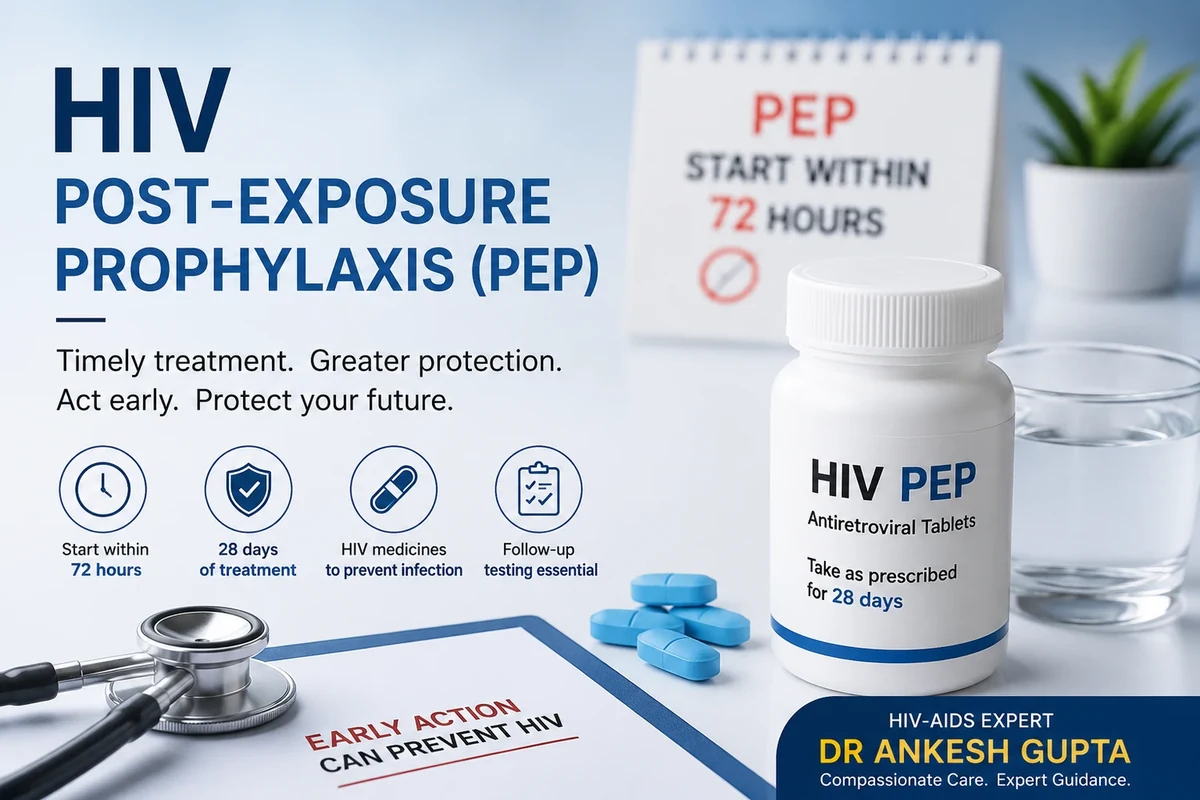
Question 1What is HIV Post-Exposure Prophylaxis?
HIV Post-Exposure Prophylaxis — commonly called HIV PEP — is a short course of antiretroviral medicines taken after a possible exposure to HIV. It helps prevent the virus from establishing infection in the body.
Question 2When should HIV PEP be started?
PEP should be started as early as possible — preferably within 24 hours, and no later than 72 hours after exposure. Every hour matters.
When the exposure is considered significant, treatment should not be delayed while waiting for detailed laboratory reports.
Question 3Which situations may require PEP?
PEP may be considered after:
The actual risk depends on the type of exposure and the HIV status of the source. A doctor can assess this quickly and advise whether PEP is indicated.
Question 4How long is HIV PEP taken?
The recommended duration is 28 days, and a three-drug antiretroviral regimen is generally preferred. The complete course must be taken regularly, without missing doses — interruptions reduce how well it works.
Question 5Which tests are required before starting PEP?
Your doctor may advise:
- A baseline HIV test
- Kidney and liver function tests
- Hepatitis B and C screening
- Pregnancy testing, where relevant
- Tests for other sexually transmitted infections
Importantly, the first dose of PEP should not be unnecessarily delayed while these tests are arranged. Treatment can begin and be adjusted once results are available.
Question 6Does PEP guarantee protection from HIV?
PEP substantially reduces the risk of HIV when started promptly and taken correctly — but it is not a 100% guarantee. Follow-up HIV testing after completing treatment is essential to confirm the outcome.
Question 7Is PEP suitable for repeated exposure?
PEP is intended for emergencies. People with frequent or ongoing risk of HIV exposure should discuss HIV PrEP (Pre-Exposure Prophylaxis) instead — medicine taken before exposure that provides continuing protection.
Sources
- World Health Organization — Guidelines on post-exposure prophylaxis for HIV
- World Health Organization — Antiretroviral therapy guidance
- Centers for Disease Control and Prevention — PEP clinical guidance for healthcare providers
Urgent risk assessment & confidential treatment
If you may have been exposed to HIV, do not wait. Consult HIV-AIDS expert Dr. Ankesh Gupta for prompt risk assessment, PEP initiation, baseline testing, and follow-up care. Early medical advice can make a major difference after a possible HIV exposure.