
Immunocompromised patients should seek early medical advice
New cough, breathlessness, falling oxygen saturation, persistent weakness or unexplained deterioration should not be ignored—even when fever is absent. Early antiviral treatment may be beneficial.
☎ Call: +91 81304 49731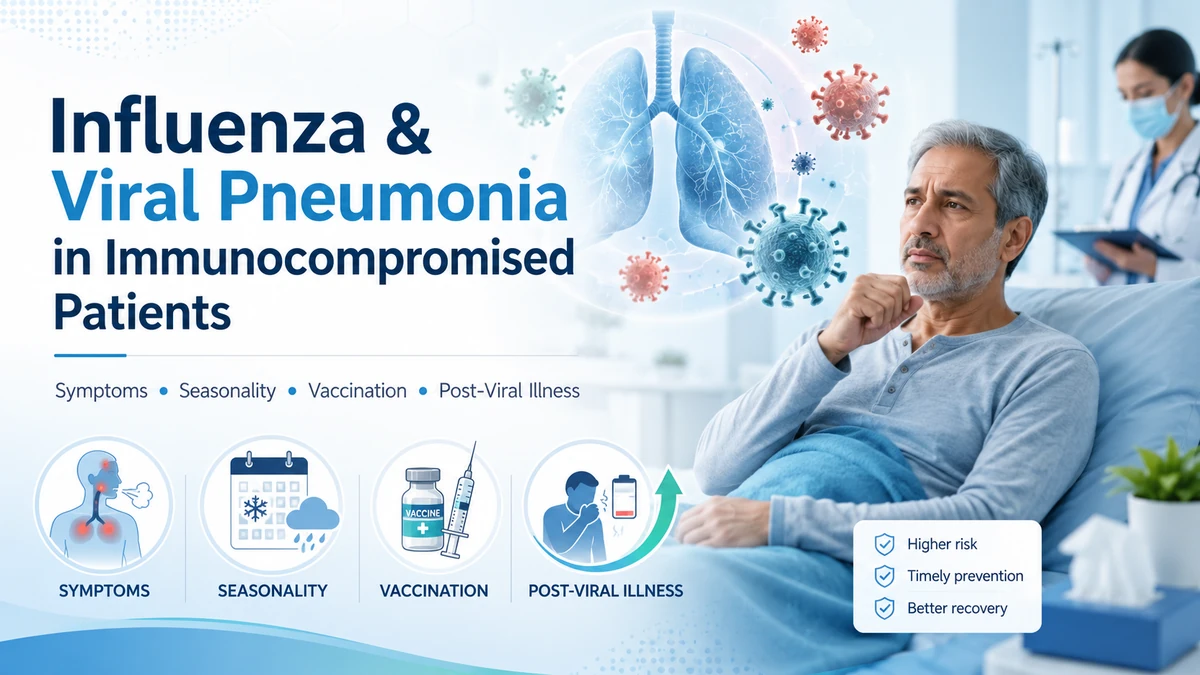
Question 1What is influenza, and why is it more dangerous in immunocompromised patients?
Influenza is an acute respiratory infection caused by influenza viruses. In most healthy individuals, it produces a self-limiting illness with fever, cough, body aches and fatigue. However, patients with weakened immunity—such as those receiving chemotherapy, organ-transplant medicines, prolonged corticosteroids, biological therapies or treatment for blood cancers—have a higher risk of severe disease.
People living with advanced HIV or other immune-deficiency conditions may also experience prolonged viral shedding, viral pneumonia, bacterial co-infection, hospitalisation and serious complications. Fever may be absent or less prominent in immunocompromised patients. Therefore, a new cough, breathlessness, weakness or reduced oxygen level should be assessed early by an infectious diseases specialist such as Dr Ankesh Gupta.
Question 2What is viral pneumonia?
Viral pneumonia develops when a respiratory virus infects the lower airways and lung tissue. Influenza is an important cause, although SARS-CoV-2, respiratory syncytial virus, parainfluenza and adenovirus can cause a similar illness.
Warning signs include:
Influenza may directly cause primary viral pneumonia. It can also damage the respiratory lining and weaken local defence mechanisms, allowing secondary bacterial pneumonia to develop. Patients whose fever or cough improves initially but then suddenly worsens should seek urgent medical evaluation from a viral pneumonia expert such as Dr Ankesh Gupta.
Question 3When does influenza commonly occur?
In temperate countries, influenza activity usually increases during winter. In tropical and subtropical regions, including India, influenza viruses may circulate throughout the year, with peaks during the monsoon, post-monsoon or cooler months depending on regional patterns.
Immunocompromised patients should not consider influenza only a winter infection. Seasonal trends are useful, but symptoms and exposure history remain important throughout the year.
Question 4What symptoms should immunocompromised patients watch for?
Typical influenza symptoms include sudden fever, dry cough, sore throat, headache, chills, body pain and marked fatigue. Immunocompromised patients may have an atypical presentation, such as little or no fever, unexplained weakness, poor appetite, persistent dry cough, breathlessness on mild activity or deterioration of an underlying illness.
Seek urgent assessment
Chest pain, confusion, bluish lips, persistent vomiting, falling oxygen saturation or worsening breathing difficulty require urgent medical evaluation.
Question 5Why is influenza vaccination especially important?
Annual influenza vaccination is one of the most effective measures for reducing influenza-related illness and complications. The immune response may be weaker in some immunocompromised patients, but vaccination can still reduce disease severity, hospitalisation and the risk of pneumonia.
Injectable inactivated or recombinant influenza vaccines are generally preferred. Live-attenuated nasal vaccines are usually avoided in significantly immunocompromised individuals. Vaccination timing may need to be coordinated with chemotherapy, transplantation or immunosuppressive treatment.
Household members and caregivers should also remain vaccinated because they may unknowingly transmit influenza to a vulnerable patient. An infectious diseases specialist Dr Ankesh Gupta can help individualise vaccination timing according to treatment and immune status.
Question 6What treatment is required if influenza is suspected?
High-risk patients should contact their doctor promptly rather than waiting for symptoms to become severe. Antiviral treatment is most effective when started early, preferably within the first 48 hours. However, treatment may still benefit patients who present later with severe, progressive or hospitalised illness.
Antibiotics do not treat influenza itself. They are used only when secondary bacterial pneumonia or another bacterial infection is suspected.
Question 7What is post-viral illness?
After influenza or viral pneumonia, cough, weakness, poor stamina and fatigue may persist for several weeks. This is often called post-viral illness. Recovery should gradually improve.
Recurrent fever, worsening cough, increasing breathlessness, chest pain or falling oxygen levels may indicate secondary pneumonia or another complication. Such patients should be reassessed by viral pneumonia expert Dr Ankesh Gupta rather than assuming that all persistent symptoms are part of normal recovery.
Sources
- World Health Organization — Seasonal influenza fact sheet
- World Health Organization — Influenza vaccines in the tropics and subtropics
- Centers for Disease Control and Prevention — Clinical signs and symptoms of influenza
- Centers for Disease Control and Prevention — Treatment of influenza
Vaccination planning and early viral-pneumonia care
For personalised vaccination timing, early antiviral treatment and evaluation of viral pneumonia in patients with weakened immunity, consult infectious diseases specialist Dr Ankesh Gupta at Choithram Hospital, Indore.