
Question 1What is osteomyelitis?
Osteomyelitis is an infection of the bone. Germs can reach the bone through the bloodstream, an open wound, a diabetic foot ulcer, a serious injury, or after bone and joint surgery.
Early diagnosis matters because an untreated infection can damage both the bone and the surrounding tissues.
Question 2What is acute osteomyelitis?
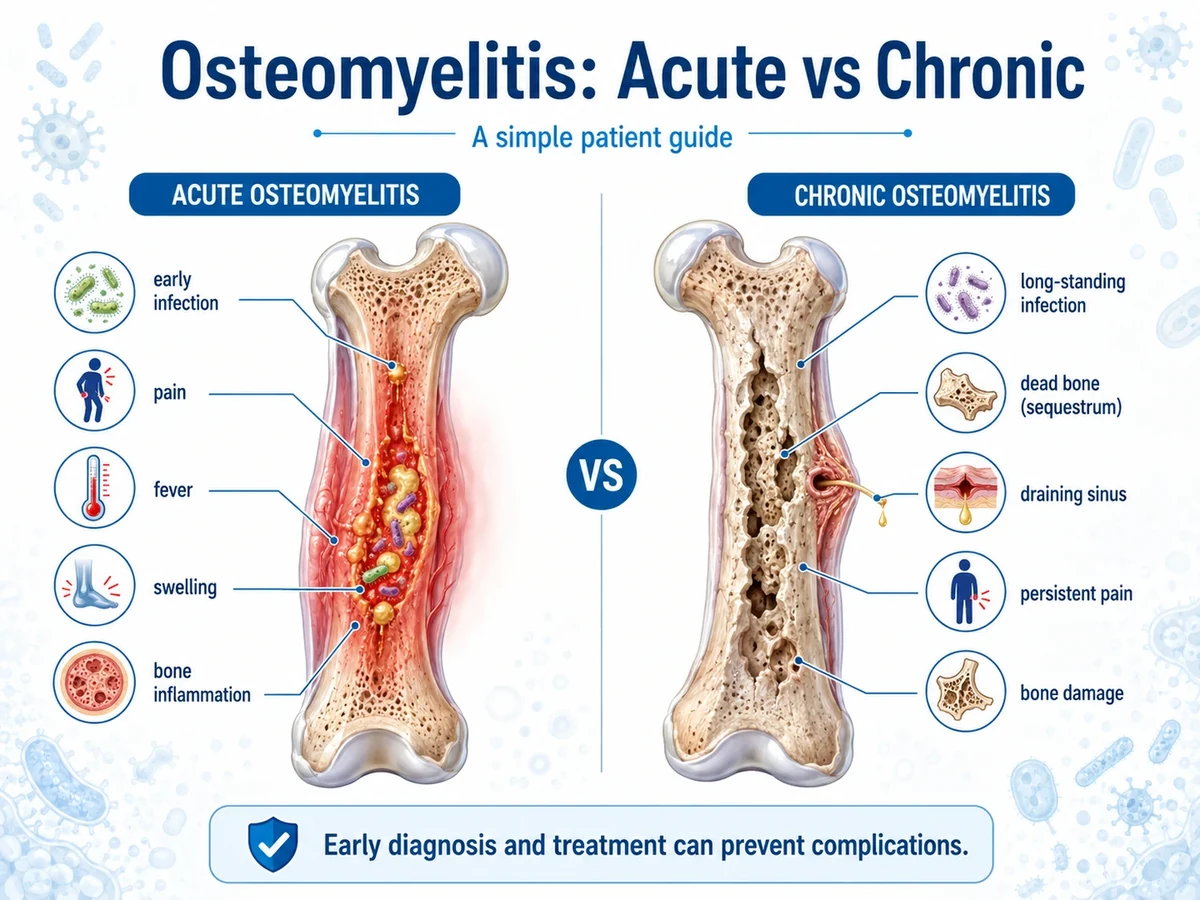
Acute osteomyelitis develops over a relatively short period. Common symptoms include:
Children may refuse to walk, while adults often experience severe, well-localised pain. When diagnosed early, many cases can be controlled with appropriate antibiotics. However, an abscess or a rapidly progressing infection may require surgical drainage and cleaning.
Question 3What is chronic osteomyelitis?
Chronic osteomyelitis is a long-standing or repeatedly returning bone infection. It may follow an inadequately treated acute infection, an open fracture, previous surgery, or a persistent wound.
In chronic infection, part of the bone can lose its blood supply and die. This dead piece of bone is called a sequestrum. Some patients also develop a sinus tract — an opening in the skin through which pus or fluid repeatedly drains.
Question 4How is osteomyelitis diagnosed?
Diagnosis begins with a detailed examination and blood tests — CRP, ESR and a complete blood count. Imaging then defines the extent of infection:
- X-rays can detect established bone damage.
- MRI identifies infection and abscesses far earlier, before X-ray changes appear.
Blood, pus, tissue, or bone samples are sent for culture. Identifying the exact bacteria or fungus lets us choose the most effective, targeted treatment rather than relying on unnecessary broad-spectrum antibiotics.
Question 5How is acute osteomyelitis treated?
Treatment usually involves antibiotics chosen according to the suspected or confirmed organism. Surgery may be required to drain pus, clean infected tissue, remove damaged bone, or stabilise a weakened area.
Question 6How is chronic osteomyelitis treated?
Chronic osteomyelitis usually needs a combined surgical and medical approach:
Surgical source control
Removal of dead and infected bone, drainage of abscesses, management of any infected implants, and coverage of the wound with healthy tissue.
Culture-guided antibiotics
Targeted antimicrobial therapy for an appropriate duration, directed by the organism identified on culture.
Question 7What complications can occur?
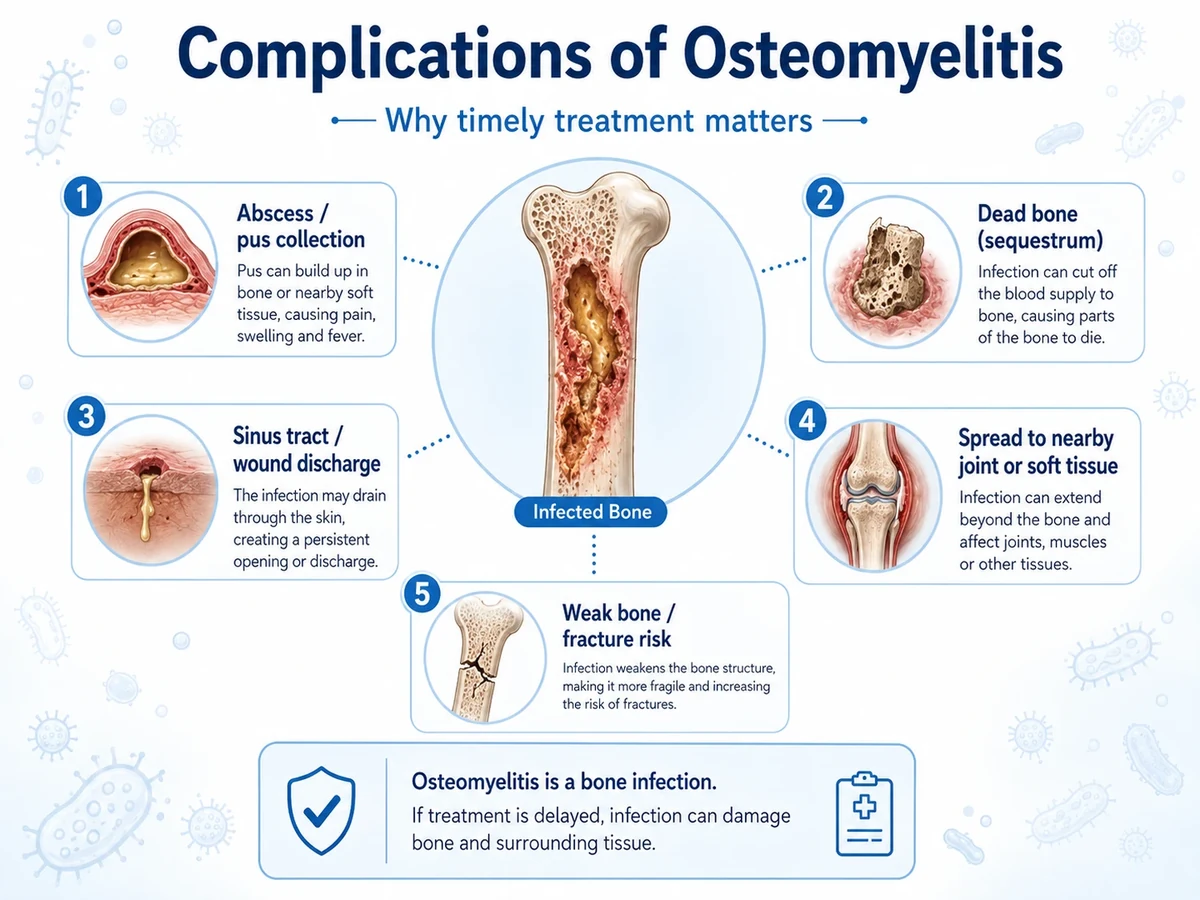
Delayed treatment can allow the infection to progress and damage bone and surrounding tissue. Recognised complications include:
- Abscess or pus collection
- Persistent wound discharge through a sinus tract
- Dead bone (sequestrum)
- Spread to nearby joints or muscles
- Weakening of the bone and increased fracture risk
- Repeated or relapsing infection
Question 8When should you consult a bone infection specialist?
Seek medical care for persistent bone pain, swelling, fever, a non-healing wound, or repeated discharge — particularly after surgery or a fracture.
Early, coordinated care offers the best chance of clearing the infection, protecting the bone, and avoiding repeated surgery.
Need expert help?
If you or a loved one has a suspected bone infection, a non-healing wound, or recurrent osteomyelitis, consult Dr. Ankesh Gupta. As an osteomyelitis and bone infection expert, he provides coordinated care with orthopaedic surgeons and microbiology teams for both acute and chronic osteomyelitis — from culture-guided antibiotics to definitive surgical source control.