
Question 1What is a prosthetic joint infection (PJI)?
A prosthetic joint infection occurs when bacteria or fungi infect an artificial joint — such as a knee, hip, or shoulder replacement. Although joint replacement surgery is highly successful, infection can develop shortly after surgery, or even several years later.
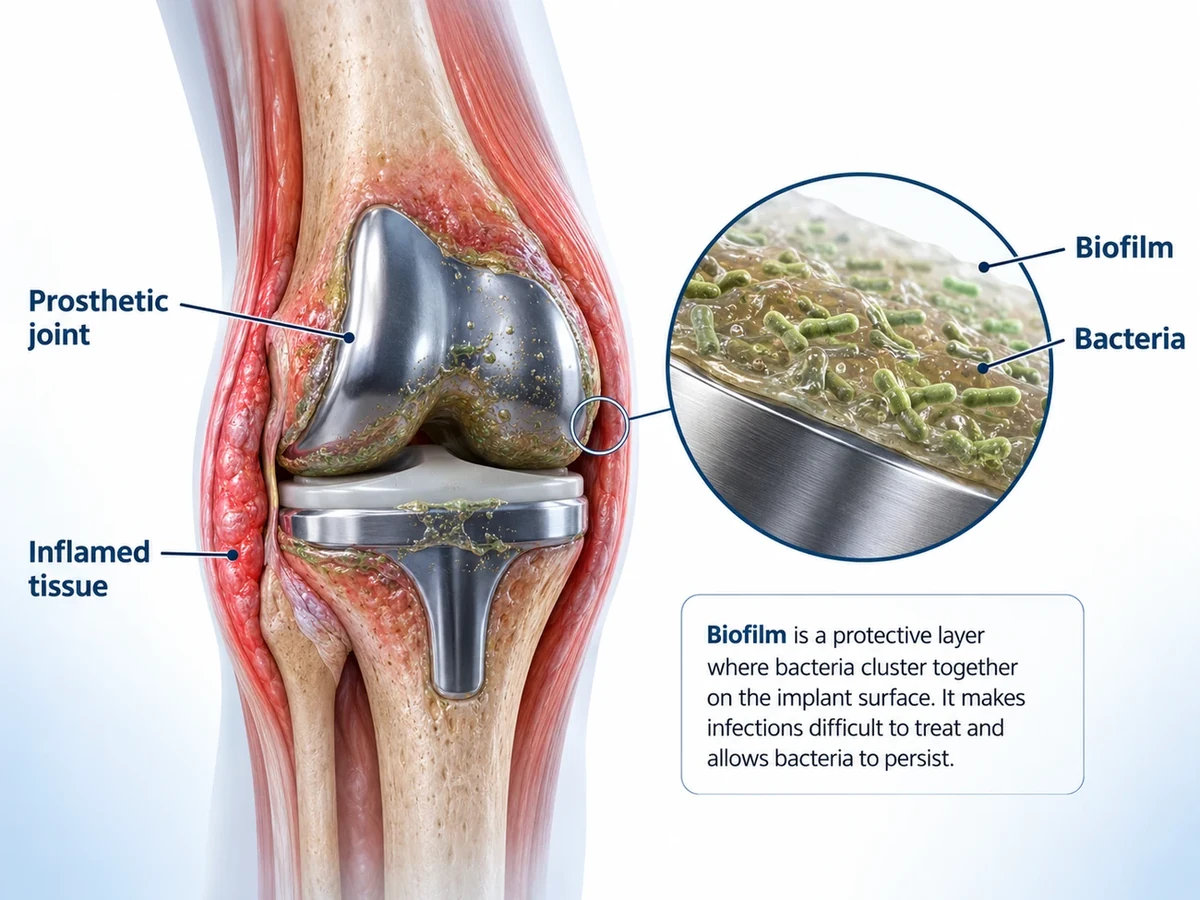
These infections require expert evaluation because germs attach to the metal implant and form a protective layer called biofilm, which makes them far harder to clear with antibiotics alone.
Question 2What are the warning signs of a prosthetic joint infection?
The most common symptoms are:
If you have had a joint replacement and notice any of these symptoms, do not ignore them. Early diagnosis significantly improves the chances of saving the implant.
Question 3Why are prosthetic joint infections difficult to treat?
Unlike ordinary infections, bacteria on an artificial joint produce a biofilm — a sticky protective coating that attaches firmly to the implant surface. Inside this biofilm, bacteria become shielded from the body's immune system and far less responsive to antibiotics.
This is why most patients need a combination of surgery and targeted antibiotics, rather than antibiotics alone.
Question 4How is a prosthetic joint infection diagnosed?
Your doctor will first examine the joint and review your symptoms. From there, the workup usually includes:
- Blood tests such as CRP and ESR, to detect inflammation.
- X-rays or advanced imaging, to assess whether the implant is loose or stable.
- Joint fluid aspiration and culture, to identify the exact bacteria or fungus responsible.
Identifying the causative organism is the single most important step. It allows the team to choose the most effective, narrowly targeted antibiotic — instead of prescribing broad-spectrum medicines unnecessarily.
Question 5What is the treatment for prosthetic joint infection?
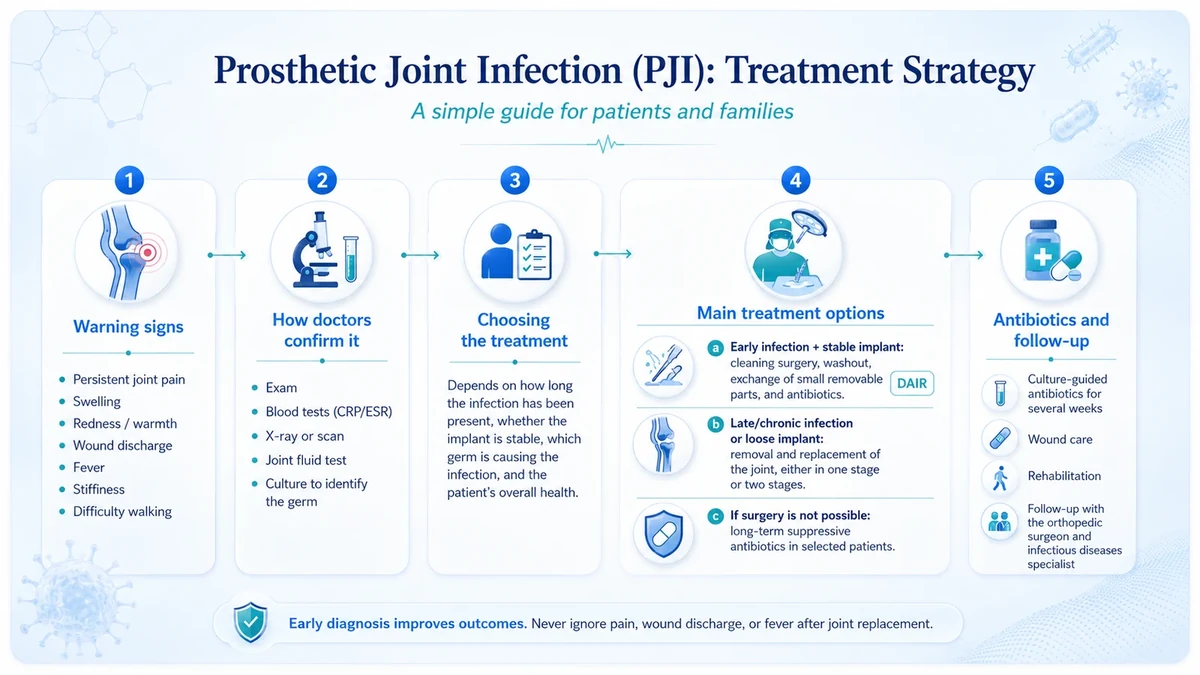
Treatment depends on four things: how long the infection has been present, whether the implant is stable or loose, which germ is causing it, and your overall health.
Early infection with a stable implant DAIR
Surgeons thoroughly clean the joint, wash out the infection, exchange small removable components, and follow with culture-guided antibiotics. The original implant is retained.
Long-standing infection or a loose implant
The infected joint is removed and replaced — either in a single stage, or in two stages with an interval of antibiotic therapy in between, depending on the individual case.
Patients unsuitable for surgery
Long-term suppressive antibiotic therapy under specialist supervision can control the infection and preserve function in selected patients.
Question 6Why should you consult a bone infection specialist?
Treating a prosthetic joint infection requires close coordination between an orthopaedic surgeon, infectious diseases specialist, microbiologist, and rehabilitation team. Early referral to a specialist improves outcomes, reduces unnecessary antibiotic exposure, and increases the chance of preserving the artificial joint.
At our centre, Dr. Ankesh Gupta and his multidisciplinary team have successfully treated hundreds of complex prosthetic joint infection cases using evidence-based, culture-guided treatment strategies. We also manage osteomyelitis (bone infection), diabetic foot infections, fracture-related infections, and other complex musculoskeletal infections.
Question 7When should I seek medical attention?
Seek immediate medical evaluation if you experience persistent pain, swelling, fever, redness, warmth, or wound discharge after joint replacement surgery — even if the surgery was performed months or years ago.
Early treatment offers the best chance of controlling the infection, preserving the implant, and returning to normal daily activities.
Need expert help?
If you or a loved one is suffering from a prosthetic joint infection, bone infection (osteomyelitis), or any complex bone and joint infection, consult Dr. Ankesh Gupta, Bone Infection Specialist. Our team provides comprehensive diagnosis, culture-guided antimicrobial therapy, and coordinated care with orthopaedic surgeons to achieve the best possible outcomes.